

The history of Mother’s Day in Australia and around the world is more complex than you thought! Dive into our blog on everything Mother’s Day and learn more about this special holiday. From origins to official flowers, there are all sorts of fun facts to know. It might just remind you how important it is to make your mother or mother figure feel spoiled and loved — and to see whether you need a fast cash loan to make that happen.
Overview:
- When is Mother’s Day in Australia?
- Is Australia’s Mother’s Day different from other countries?
- How do people celebrate Mother’s Day in Australia?
- What is the origin of Mother’s Day?
- What flowers should you get for Mother’s Day?
When is Mother’s Day in Australia?
Mother’s Day in Australia is celebrated on the second Sunday in May. This means the date changes each year, but in 2026, it falls on Sunday, May 10th. It’s a day dedicated to honouring mothers and mother figures for their love, sacrifices, and unwavering support.

Is Australia’s Mother’s Day different from other countries?
Not necessarily. The majority of countries also celebrate Mother’s Day on the second Sunday of May, such as the US, China, Greece and Brazil.
While most countries celebrate on a date in May, some countries honour their mothers on other special dates, such as:
- 8th of March: many countries such as Albania, Russia, and Vietnam coincide Mother’s Day with International Women’s Day
- Fourth Sunday of Lent (mid-March): some countries such as Ireland, the UK, and Nigeria tie in Mother’s Day (Mothering Sunday) with the religious celebration
- 21st of March: many countries in East Africa and the Middle East celebrate Mother’s Day on the spring equinox
There are many different Mother’s Day dates around the world. This is due to many different cultural or geographical origins, often influenced by seasons and weather, astronomical cycles, religion or folklore, or influential or powerful historical figures. Interestingly, in the case of France and Germany, Mother’s Day was a means to encourage a higher birth rate!
How do people celebrate Mother’s Day in Australia?
Mother’s Day in Australia has gone beyond biological mothers. The special day also celebrates stepmothers, grandmothers, mother figures, and any woman who has had an impact on an individual.
Common ways that Australians celebrate Mother’s Day include:
- Breakfast in bed and a sleep-in
- Giftgiving (flowers, chocolates, cards)
- Relaxation activities like spa days
- A family gathering or special meal out
- A mini holiday to her favourite destination
However, you might find that a lot of people leave Mother’s Day gifts to the last minute. So make sure not to forget!

Aussies also like to extend Mother’s Day beyond families and celebrate women in the community, especially through charitable donations. Some charity events include:
- Mother’s Day Classic: Australia’s largest fun run event for breast and ovarian cancer research, held in over 70 locations across city and regional areas
- Share the Dignity Mum and Bub Bag: donate towards a bag filled with essentials like toiletries, nappies, and maternity pads to take pressure off mums experiencing poverty
- Motherless Daughters Pre Mother’s Day High Tea: support women grieving the loss of their mothers and foster new connections in these events held in each of the major cities in Australia
- Motherland Mother’s Day Event: support mothers in rural Australia who struggle with mental health and isolation with their Mother’s Day Event in NSW and Queensland.

What is the origin of Mother’s Day?
Does it go back to ancient times?
Mother’s Day can be vaguely traced back to the annual spring festivals held in Ancient Greece and Rome which celebrated their respective mother goddesses, Rhea and Cybele.
What is Mothering Sunday?
Another early form of Mother’s Day is found much later, in Middle Ages Britain, called Mothering Sunday. The day did not celebrate individual mothers, but rather the Virgin Mary. Attendees commemorated the occasion by visiting their “Mother Church”, which is the church where they were baptised.
Mothering Sunday later lost relevance until Constance Penwick-Smith revived it in 1913, who was inspired by the US. By the 1950s, it was commonly celebrated across the UK and Commonwealth countries. Mother’s Day remains on the fourth Sunday of Lent in the UK under the more secular name and tradition.
What is the history of Mother’s Day?
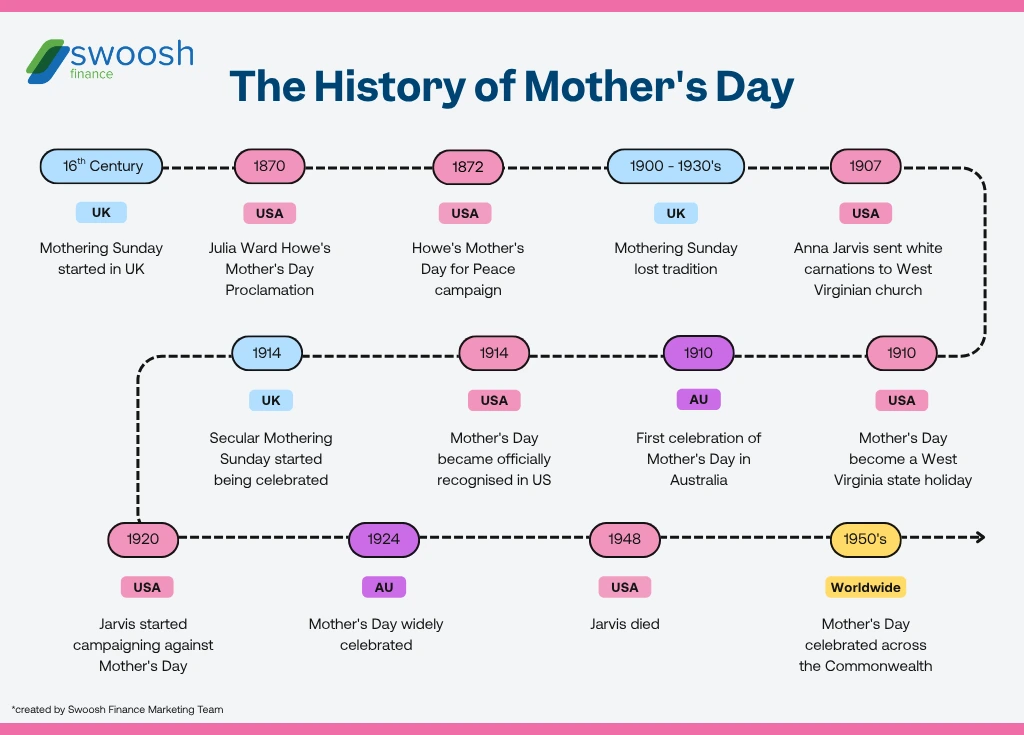
The history of Mother’s Day is a long one. After the American Civil War, activist and writer Julia Ward Howe campaigned for Mother’s Day for peace. In 1870, she called to unite all women of all nationalities, settle tensions together, and prevent violence and death. Howe’s call is now famously named the “Mother’s Day Proclamation”. It was met with little traction, so she campaigned for an annual Mother’s Day for Peace in 1872. Unfortunately, it still didn’t stick for another three decades.
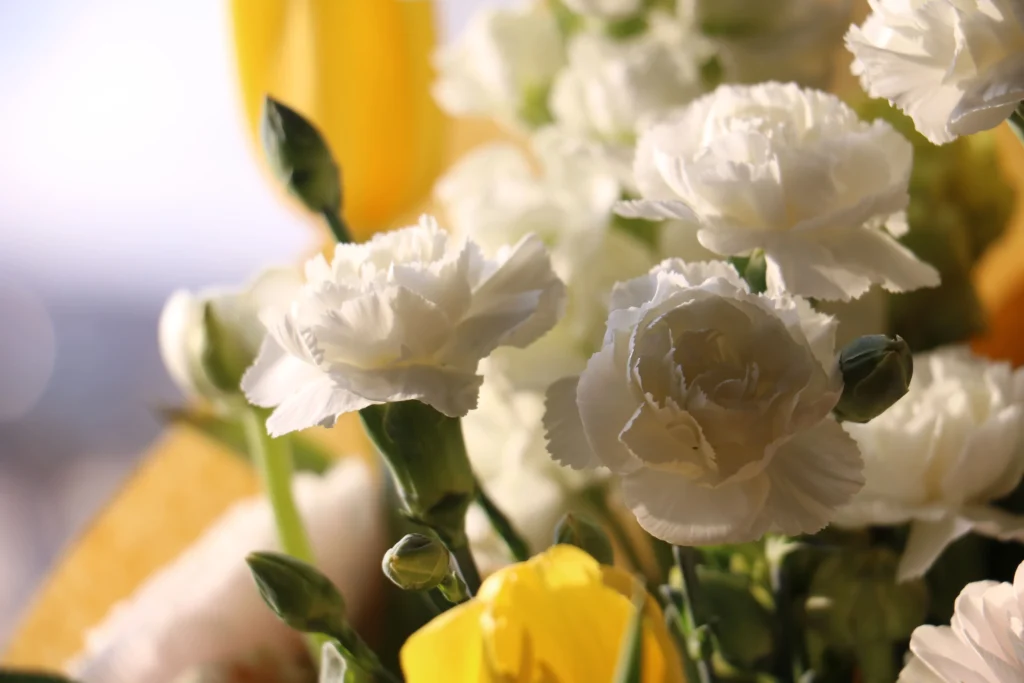
In 1907 West Virginia, a woman named Anna Jarvis wanted to honour her mother who had passed away by giving out white carnations at the church her mother had taught Sunday school at. She had also been a peace activist during the Civil War, helping wounded soldiers and bringing women together to deal with public health. And of course, white carnations were her favourite flower.
Jarvis also associated the white carnations with qualities of motherhood, purity, long-lasting faithfulness, encompassing love and beauty. Under this symbol, Jarvis wanted to set aside a day to honour all mothers in the name of peace.
Their local church continued to distribute carnations to mothers in the following years, and surrounding churches and communities followed suit. It became a nationally recognised holiday by the American government in 1914.
Why did the founder of Mother’s Day turn against it?
Unfortunately, the origin of Mother’s Day is not a totally fun story. In the 1920s, Anna Jarvis began to hate the very holiday she founded. The prices of carnations and greeting cards rose, and politicians and charities took advantage of the holiday for donations. She was deeply hurt at how a sentimental and noble holiday had become so commercialised. Jarvis had intended messages to be handwritten with personal notes, seeing printed cards as lazy. She also disliked the introduction of red carnations, believing that it tarnished the motherly qualities and purity that the white symbolised. The virtue of her original vision of Mother’s Day had become lost.
Ever the protester, she spent her whole life refusing every offer of profits from the floral industry and spent every other moment in legal battles against the commercialisation of Mother’s Day. Before she passed away in a sanatorium, one of the last things she did was go door-to-door campaigning for the abolishment of Mother’s Day. People theorise that the floral and greeting card companies that profited from Mother’s Day paid her medical bills.
How did Mother’s Day form as it is today in Australia?
The first celebration of Mother’s Day in Australia can be traced back to 1910. At this stage, only a few churches and organisations observed the occasion, following a similar tradition to that in the US at the time by wearing carnations.
It wasn’t until a Sydney woman named Janet Heyden in 1924, who organised gifts to lonely mothers in the local hospital and encouraged others to do the same. This was after World War I, when many mothers had lost their husbands and sons. This can also explain the culture of charity and community during Mother’s Day in Australia.
This timeline shows how Mother’s Day developed in the UK, US, and Australia, starting from local traditions to the modern holiday.
What about Father’s Day?
Father’s Day was actually just a counterpart to Mother’s Day, and commercialisation did the rest of the work. In 1910, Sonora Smart Dodd organised a Father’s Day service, inspired by Mother’s Day, in honour of her father, who fought in the Civil War. Father’s Day was not nationally recognised in America until 1972. Australia started celebrating Father’s Day in 1936.
What flowers should you get for Mother’s Day?
What is the official flower of Mother’s Day?
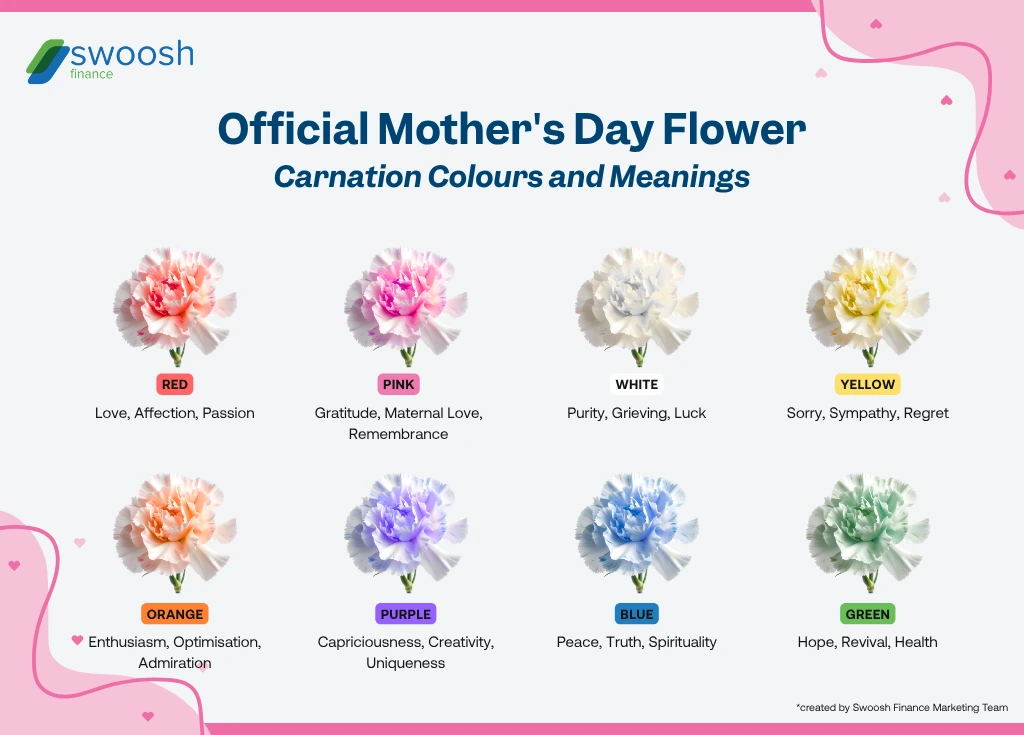
Carnations are the official flower of Mother’s Day. Pink and red variations are the main focus, as they symbolise love in the language of flowers.
While Anna Jarvis started the tradition with white carnations, they have since become more of a grieving flower, which you might purchase as decoration to commemorate a lost mother.
But carnations come in all sorts of colours, including dyed versions, so choose the one that your mother would love! Naturally, carnations come in a spectrum of pink, red, purple, orange, yellow and white. For dyed carnations, you can purchase them yourself or DIY them with some white carnations and food colouring.
What are the traditional Mother’s Day flowers in Australia?
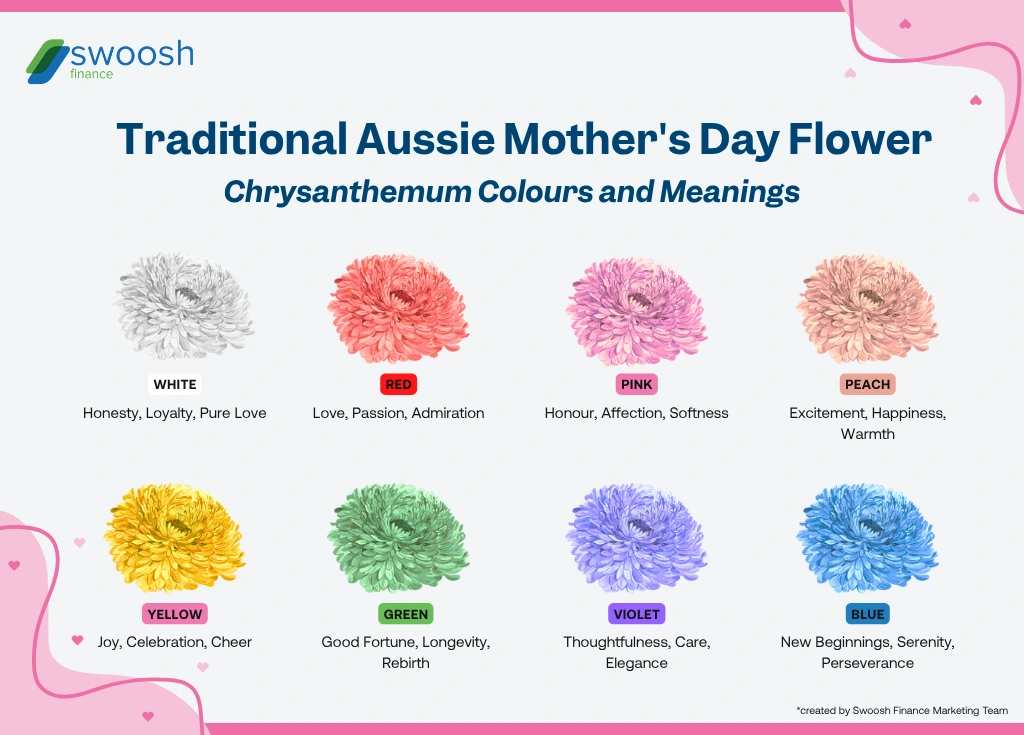
While carnations are the official flower of Mother’s Day, roses, tulips, and chrysanthemums are also considered traditional Mother’s Day flowers in Australia. Chrysanthemums are probably the most popular flower for Mother’s Day here for many reasons, such as:
- Having the word “mum” in the name
- Being in bloom in May
- Being more affordable
- Having a wide range of colours like carnations
- Lasting a long time
- Symbolising family, love, gratitude and optimism
Generally, pink flowers are the way to go for Mother’s Day if most traditional flowers aren’t your style.
Want to do something special this Mother’s Day? Swoosh has you covered!
Looking to celebrate the incredible women in your life but low on funds? A fast cash loan can help ensure you make the day as special as possible without draining your savings! Apply online for fast, easy loans of up to $5,000.